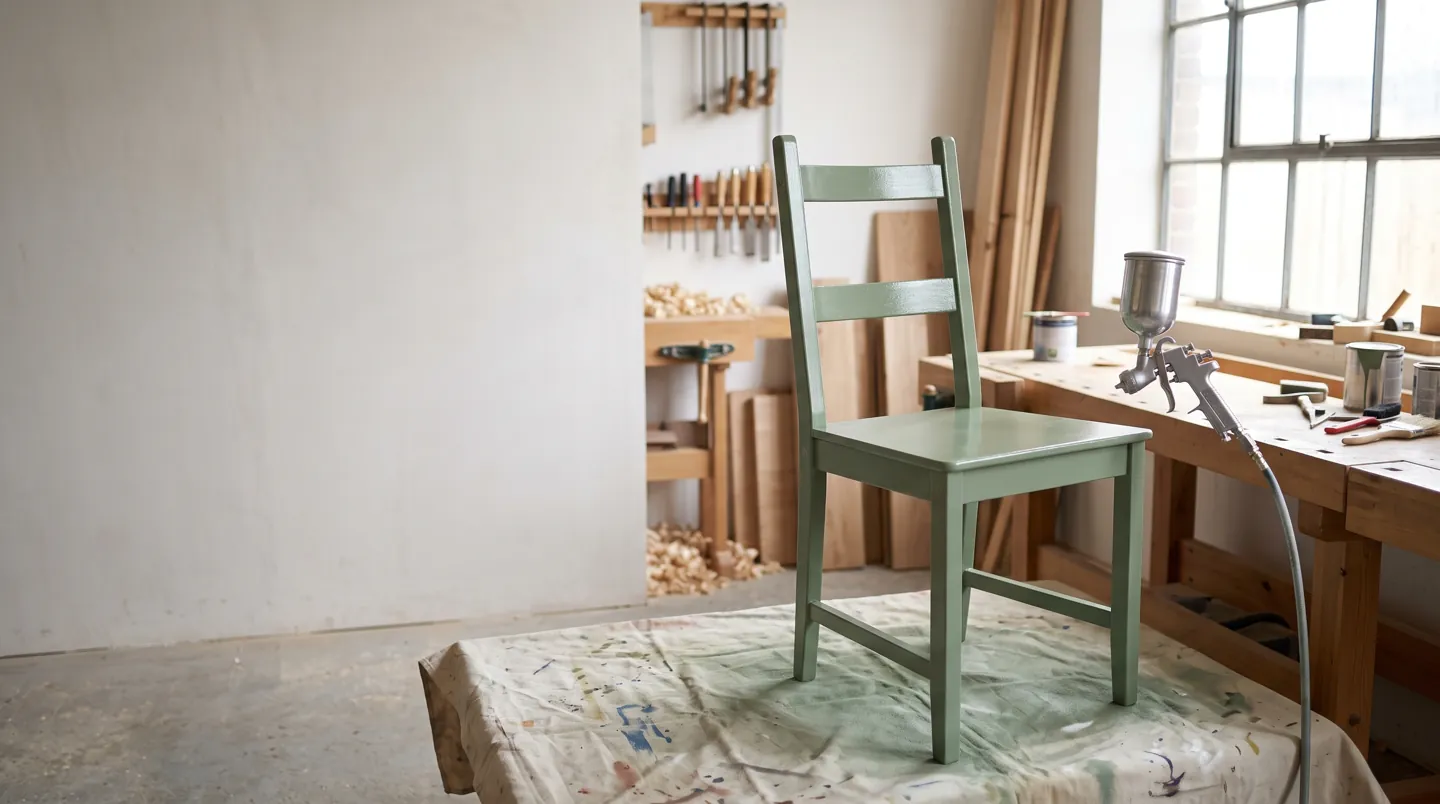
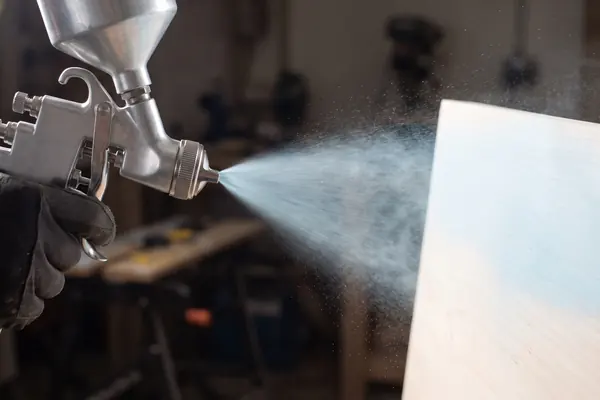
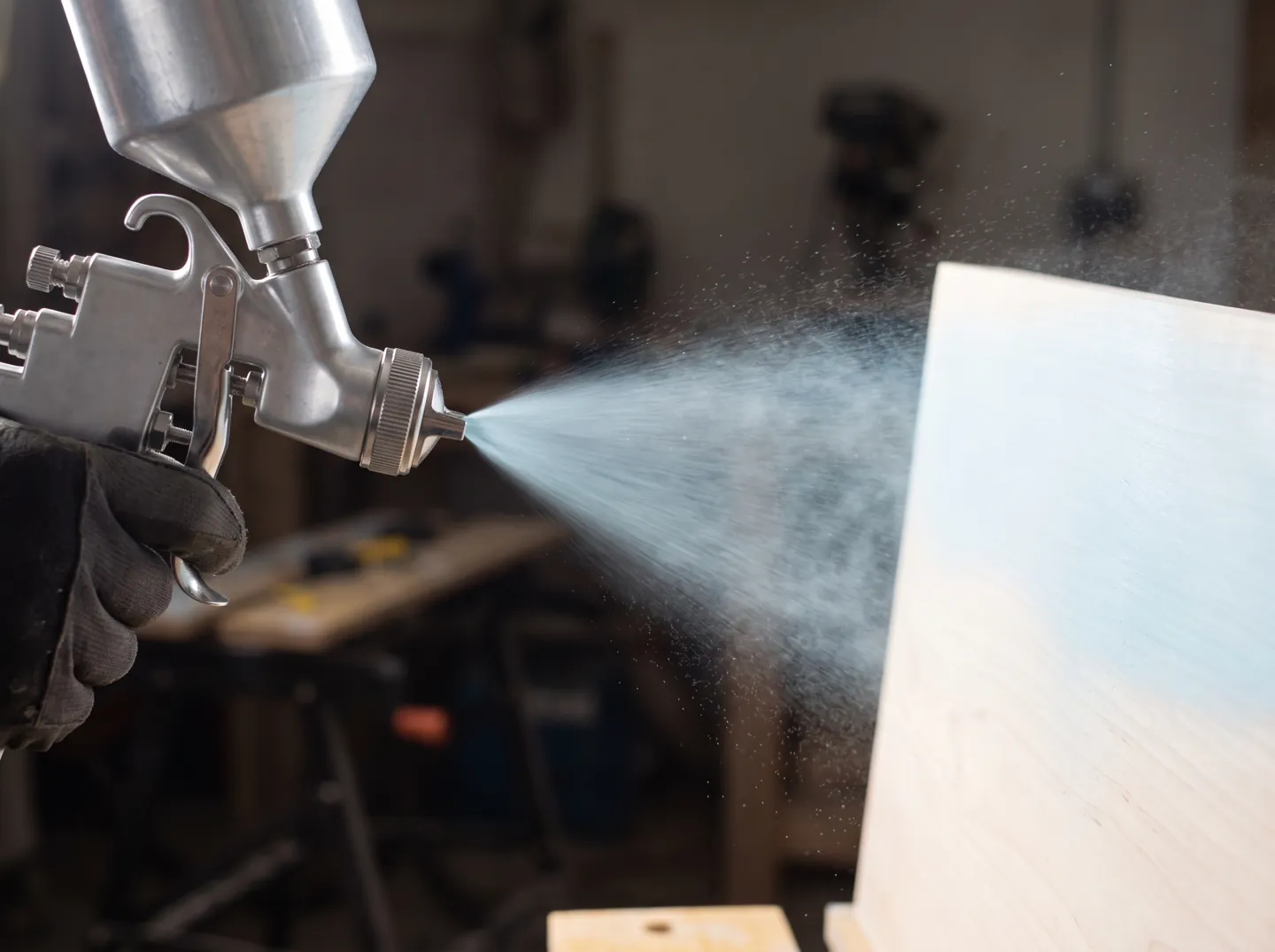
Compressed air breaks the paint into tiny droplets and carries them to the surface. Some stick; the rest drifts away as overspray, an invisible mist that wastes paint and can be breathed in.
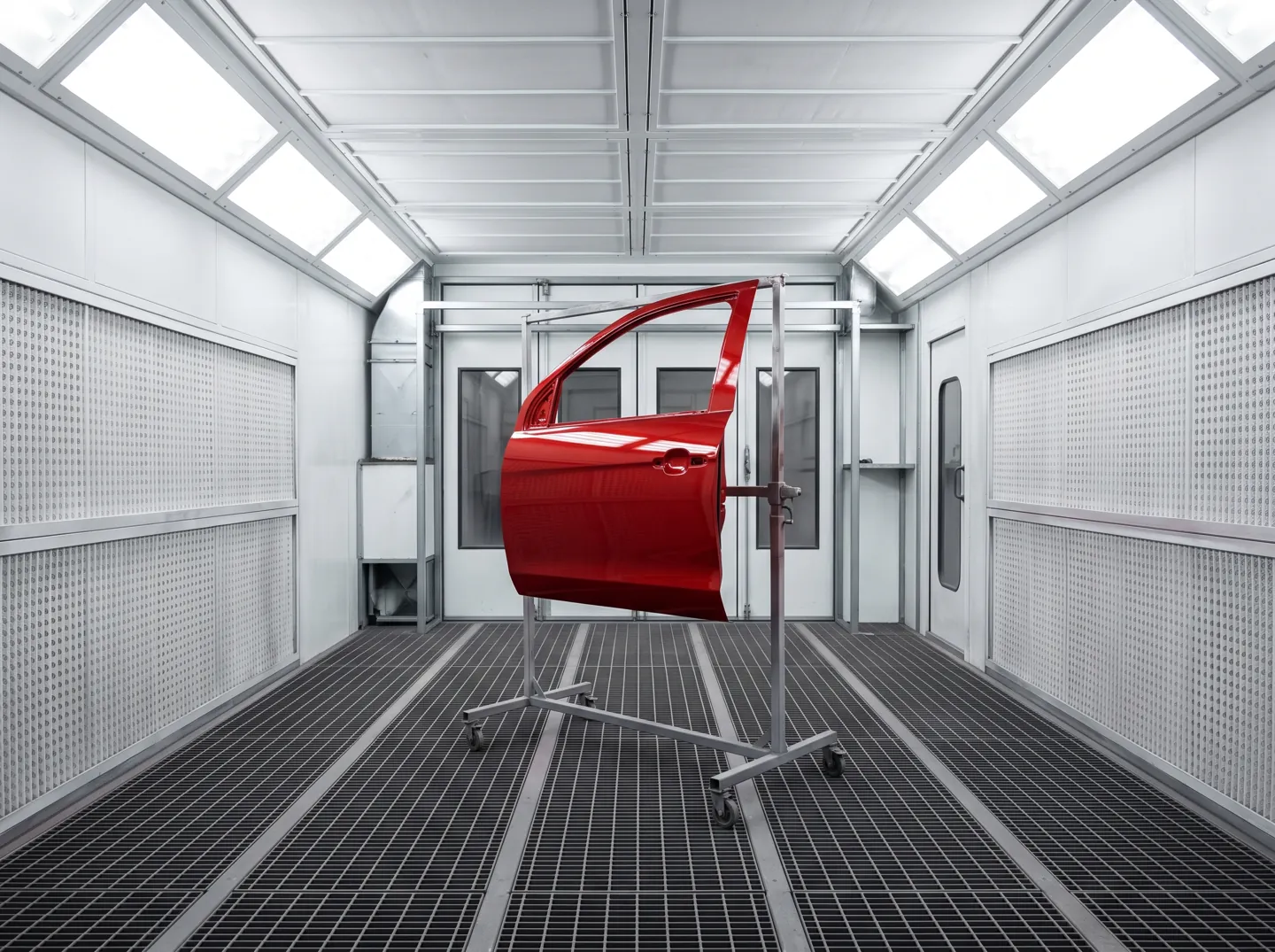
HSE says spraying 2-pack paints makes a fine, invisible mist that spreads like smoke, which is why trade sprayers work in booths with air-fed breathing apparatus.
Pick a situation to see how it affects transfer efficiency, the share of sprayed paint that actually lands on the work. The bar shows how much overspray to expect, relative to the others.
Based on Tan and Flynn (2000), a University of North Carolina study of an HVLP gun, and the US EPA HVLP best practices checklist. Results vary with the gun, paint and set-up.
TWO NUMBERS WORTH KNOWING
Pressure and distance both cost paint.
One figure on how low HVLP pressure is, one on what an extra inch of distance does.
≤ 10 psig
Usual operating pressure of an HVLP gun
Compared with 25 to 100 psig for a conventional gun. The low pressure produces larger droplets and a higher transfer efficiency.
PRESSURE · TAN AND FLYNN 2000
2.25–3.30%
Measured drop in transfer efficiency per extra inch
In wind tunnel tests of an HVLP gun, transfer efficiency fell by this much for each inch added to the gun-to-surface distance, depending on nozzle pressure.
DISTANCE · TAN AND FLYNN 2000
Transfer efficiency is the share of the paint sprayed from the gun that is deposited on the surface. The study notes it is used as an index in both workplace exposure and environmental standards.
WHAT THE CHECKLISTS STRESS
Technique matters as much as the gun.
The US EPA's HVLP checklist for paint shops lists simple habits that raise transfer efficiency and cut overspray. These describe good practice; they are not training.
Match the air supply
Use a large enough air hose and a compressor that can deliver the air volume the gun needs.
Pick the right tip
Use the right gun tip for the job and set the gun up for the correct pressure at the tip.
Keep the gun square
Hold the gun square to the surface and at the same distance all the way through each stroke.
Train and check
The checklist includes training, and HSE says isocyanate paint training should be repeated at least every 5 years.
AI-generated image, not a photograph of a real person or place.AI-generated image, not a photograph of a real person or place.
WHAT HSE SAYS ABOUT THE MIST
Invisible, and slow to clear.
HSE says isocyanates in 2-pack paints are one of the main causes of occupational asthma in the UK, and that vehicle paint sprayers have long been the group most at risk. 'Water-based' does not mean isocyanate-free.
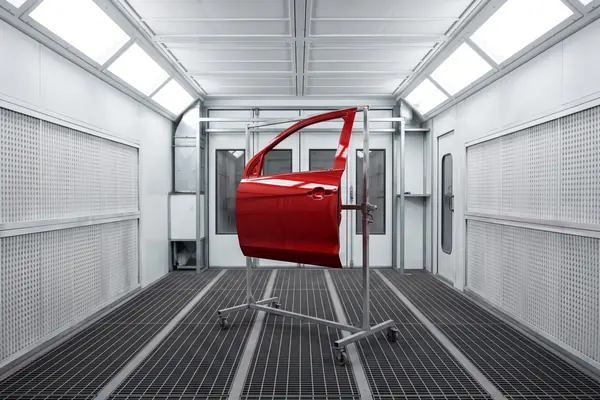
Its guidance for bodyshops is to spray in a booth or spray room with exhaust ventilation, wear air-fed breathing apparatus, as filtering respirators are not suitable, and wait for the booth's measured clearance time before lifting the visor.
Questions
Questions people ask
What does HVLP stand for?
High volume, low pressure. An HVLP gun uses a large volume of air at low pressure, usually 10 psig or less, compared with 25 to 100 psig for a conventional air gun.
What is overspray?
Paint that leaves the gun but does not land on the work. Transfer efficiency is the share that does land, so the lower it is, the more overspray there is in the air.
Why does distance matter?
In a University of North Carolina study of an HVLP gun, measured transfer efficiency fell by about 2.25 to 3.30 percent for each extra inch between gun and surface.
Is a dust mask enough for spraying car paint?
Not for isocyanate paints. HSE says filtering respirators are not suitable for spraying them and that air-fed breathing apparatus must be used, inside a booth or spray room.
Are water-based paints isocyanate-free?
Not necessarily. HSE says isocyanates are used in some water-based paints, and that water-based means emulsion based with reduced solvents, not isocyanate-free.